
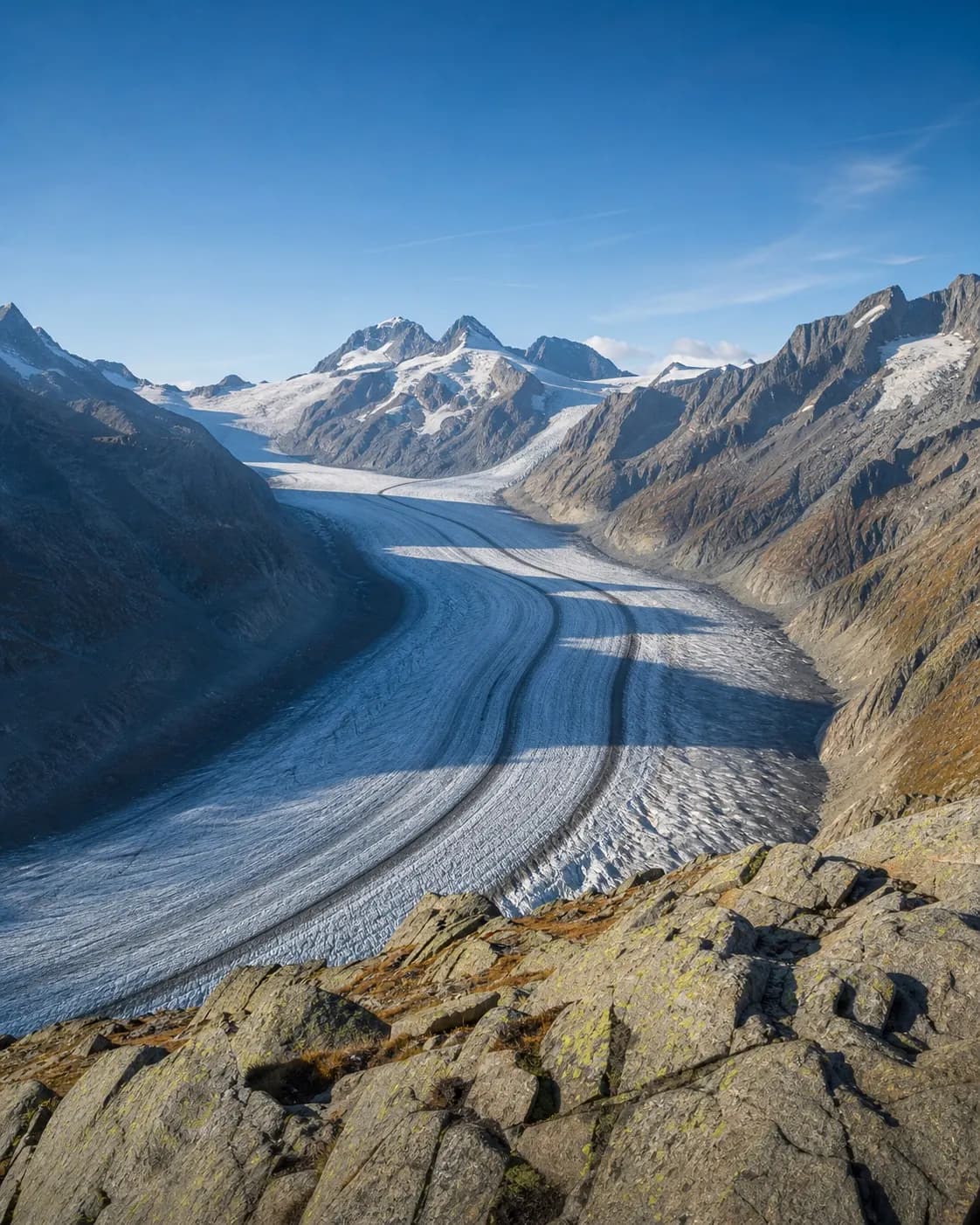
Valais · Aletsch Arena · mountains
Great Aletsch Glacier
A sweeping river of ice and one of the most powerful panoramas in the Swiss Alps.
Quick answer
A sweeping river of ice and one of the most powerful panoramas in the Swiss Alps.
- Useful for
- Independent day-trip and itinerary planning
- Best time
- June–October
- Time needed
- Full day
Why go
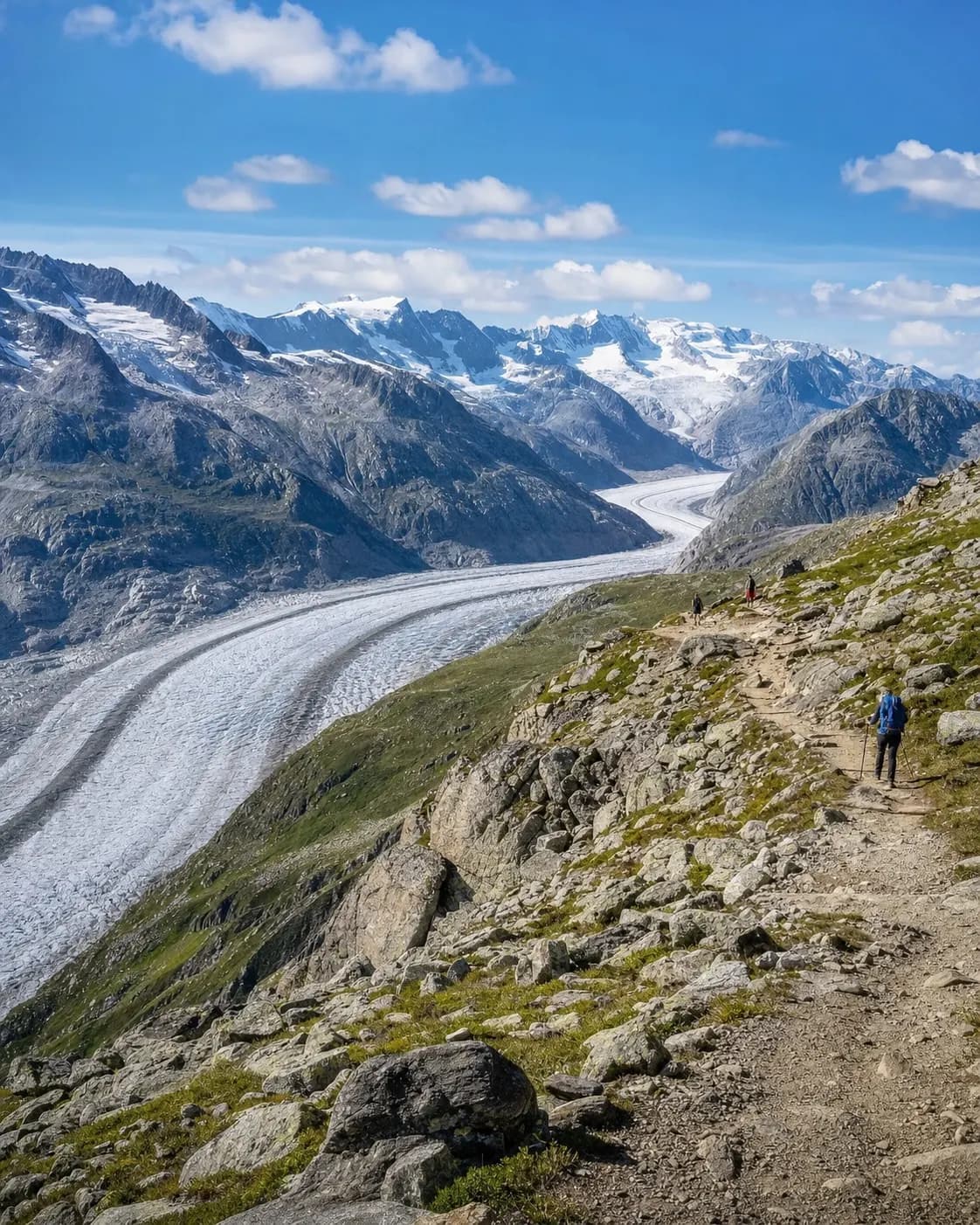
The Great Aletsch Glacier flows through the UNESCO Swiss Alps Jungfrau-Aletsch landscape. Viewpoints at Moosfluh, Bettmerhorn and Eggishorn reveal the glacier curving between high peaks. Cable cars make the panorama accessible without technical mountaineering, while marked trails connect car-free mountain villages.
Come for scale: ice, rock and four-thousand-metre peaks fill the horizon.
What to see
- ↗ Bettmerhorn viewpoint
- ↗ UNESCO landscape
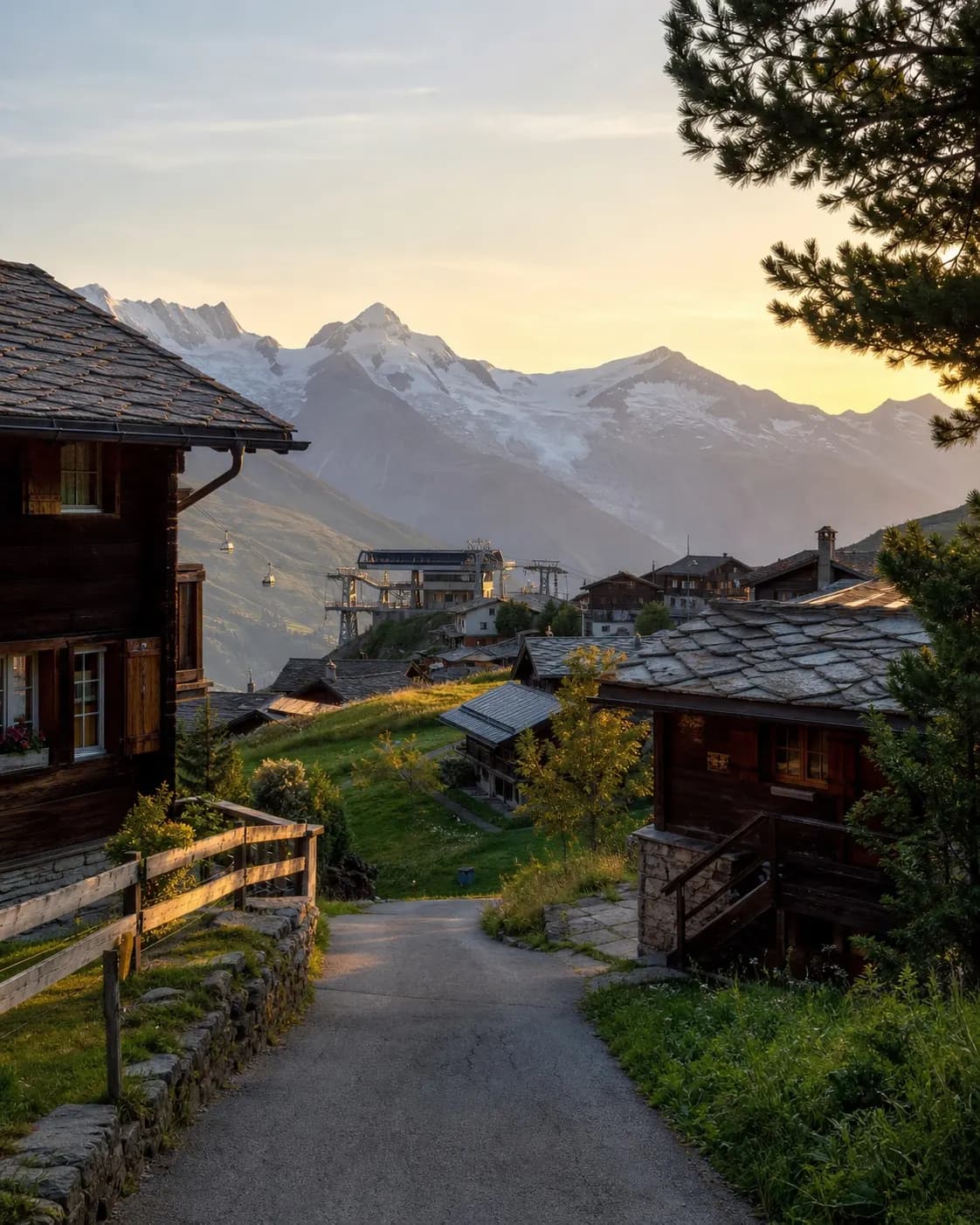
- ↗ Car-free Bettmeralp
Valais · Aletsch Arena
What the day feels like
Great Aletsch Glacier is a mountain landscape worth treating as a journey rather than a quick photo stop. Begin with the main viewpoint, leave room for a walk and notice the character of the place. Come for scale: ice, rock and four-thousand-metre peaks fill the horizon. In full day, essential stops fit comfortably when direction is clear.
In-depth guide
Great Aletsch Glacier
Aletsch is not one single stop. It is a high-Alpine region with several valley approaches, car-free villages and viewpoints on opposite parts of the glacier. Choose one access corridor and one main viewpoint before buying transport; trying to combine every platform in a day usually replaces landscape time with transfers.
Why this landscape matters
The Great Aletsch Glacier lies inside the Swiss Alps Jungfrau–Aletsch World Heritage property. UNESCO describes this as the most glaciated part of the European Alps and highlights its record of mountain building, glacial landforms and ecological change after ice retreat. The significance is therefore larger than the view alone: the valley of ice makes geological time visible.
From the Valais side, the glacier appears as a broad curve between high peaks. Aletsch Arena identifies Hohfluh, Moosfluh, Bettmerhorn and Eggishorn as its four principal viewpoints. Each shows a different section and sits at high altitude, so visibility, wind and temperature can differ sharply from conditions in the Rhône valley.
Choosing a viewpoint
Bettmerhorn works well for a first visit based around Bettmeralp: the village and lift create a clear out-and-back day. Moosfluh pairs naturally with Riederalp and gives room for shorter walks. Eggishorn is the highest of the four official viewpoints and suits travellers prioritising a wide mountain panorama from the Fiesch/Fiescheralp side.
Treat cable-car access and hiking as separate decisions. A lift makes a viewpoint accessible but does not turn every connecting trail into an easy walk. Check the operating timetable, trail status and final descent before leaving. Walking onto the glacier is a different activity and should only be done with a qualified guide.
Beyond the ice
The surrounding plateau changes the character of the trip. Riederalp, Bettmeralp and Fiescheralp are car-free mountain villages, while the rail connections and base stations sit in the Rhône valley. That separation is useful when planning accommodation: a valley stay offers simpler onward travel; a plateau stay gives earlier access to the landscape but depends more on lift timetables.
Aletsch Forest adds a quieter counterpoint to the viewing platforms. The protected landscape documents how vegetation returns where ice once stood. For a weather backup or context before a hike, the World Nature Forum in Naters explains the wider UNESCO region indoors.
01 — 03
Choose your version of the day
Panorama day
- Best for
- First visit, families and limited hiking time
- Plan
- Choose Bettmerhorn, Moosfluh or Eggishorn; use one valley access and return through the same corridor.
- Check first
- Lift timetable, cloud cover and last descent
Viewpoint plus walk
- Best for
- Travellers comfortable on signed mountain paths
- Plan
- Pair one lift-served viewpoint with a signed local route; keep enough time to reverse the route if conditions change.
- Check first
- Trail grade, remaining snow, exposure and return transport
Two-day region stay
- Best for
- Aletsch Forest, more than one village and flexible weather
- Plan
- Use day one for a glacier viewpoint and day two for the forest, a village route or the World Nature Forum.
- Check first
- Accommodation side matters: valley and plateau have different transport rhythms
SWITZERLAND LOCATOR
Where you are going
Valais · Aletsch Arena
- Switzerland
- CH
- Coordinates
- 46.442° N · 8.077° E
How to shape the route
How to shape the route
Three clear stages make Great Aletsch Glacier easy to experience without turning the visit into a race.
- 01
Arrive and find the view
Train to Mörel or Betten, then cable car. Get oriented at “Bettmerhorn viewpoint” before taking the longest section.
- 02
Take the main route
Continue toward “UNESCO landscape”. Give this stage most of the visit and favour a calm pace.
- 03
End without rushing
Finish near “Car-free Bettmeralp”. Leave enough time for the return connection or next regional stop.
See the landscape
Know before you go
Know before you go
A compact plan for Valais · Aletsch Arena: check transport, timing and local conditions before leaving.
Season and weather
Best general window: june–october. Check local forecast, route status and seasonal opening on travel day.
Time and pace
Allow around full day. Add a buffer for transfers, viewpoints, queues and an unhurried walk.
Practical detail
Start early for clearer mountain views. Save an offline map and final return connection.
Before leaving
Before leaving
- 01Select one viewpoint and its valley station
- 02Check mountain railway operations and last descent
- 03Check weather at viewpoint altitude, not only in the valley
- 04Open the route in swisstopo and confirm trail grade
- 05Carry layers, water and sun protection
- 06Use a qualified guide for any glacier access
FAQ
Frequently asked questions
Which Aletsch viewpoint is best for a first visit?+
Bettmerhorn is a clear first-visit option when your day is based around Bettmeralp. Moosfluh pairs with Riederalp; Eggishorn is the highest official viewpoint. The best choice is the one with the clearest live weather and simplest same-day access.
Can I step onto the Aletsch Glacier without a guide?+
No. A viewpoint visit and a glacier tour are different activities. Switzerland Tourism states that crossing the glacier should only be done with a guide.
Can I see every viewpoint in one day?+
It is a poor default plan. The viewpoints use different access corridors and lift connections. One viewpoint plus a walk gives a calmer and more reliable day; use a second day for another side of the region.
When is the best time to visit Great Aletsch Glacier?+
Main recommended period: June–October. Check weather, access and transport hours shortly before departure.
How much time does Great Aletsch Glacier need?+
Use Full day as a working estimate, plus time for transfers and viewpoint stops.
How do I reach it by public transport?+
Train to Mörel or Betten, then cable car. Recheck live connections on the day.
What should I see first?+
Start with “Bettmerhorn viewpoint”, continue to “UNESCO landscape”, then finish around “Car-free Bettmeralp”.
Sources and review: 2026-09-07.
Switzerland Tourism ↗UNESCO World Heritage Centre ↗Aletsch Arena — viewpoints ↗